IPT recordings and transcripts of more than a dozen events from 2017 to 2020 show El-Sayed personally soliciting donations for CAIR, praising its work, and telling Rep. Ilhan Omar that her objection to repeated demands that Muslim officials condemn Hamas and al-Qaeda was "entirely correct." Speakers on the same programs accused "the Jewish Federation" of funding neo-Nazis and refused to condemn terrorism "as a Muslim."
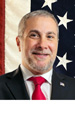
On the night of October 20, 2018, about ten weeks after he finished second in Michigan's Democratic primary for governor, Abdul El-Sayed stood before the national banquet of the Council on American-Islamic Relations in Arlington, Virginia, and thanked his hosts.
"I am excited to be here tonight," he said, "because CAIR is an organization that has looked beyond its responsibility to Muslims alone. Because the injustices in this country are far bigger than the ones that we face alone." Earlier in the evening, CAIR's executive director, Nihad Awad, had singled him out from the stage: "including Dr. Abdul Sayed, who ran for governor in Michigan," he said, to applause.
Later in the program, other speakers took the microphone. Hatem Bazian, the Berkeley lecturer who co-founded Students for Justice in Palestine and American Muslims for Palestine—groups that have openly championed and supported Hamas—told the audience that "the Jewish Federation nationally has been funding the agents of Islamophobia in this country. They've been funding Pamela Geller, David Horowitz, Canary Mission, Daniel Pipes... Geert Wilders, a Neo-Nazi group, or neo-Nazi politician," he said, applying that label to the Dutch politician Wilders. "And then you have members who are pro-Israel, defending Israel, who have the audacity to come in our place and claim that we are anti-Semites," Bazian said. "You fund neo-Nazis, you have to answer for this." Bazian has been one of the most virulent supporters of groups demanding the destruction of Israel.
"The Jewish Federation nationally has been funding the agents of Islamophobia... You fund neo-Nazis, you have to answer for this."
- Hatem Bazian at the CAIR national banquet where El-Sayed was a featured speaker, Oct. 20, 2018
About 16 minutes later, the cleric Yasir Qadhi, then a lecturer at Rhodes College in Tennessee and the evening's closing speaker, paused in his remarks to point to someone in the audience. "If Abdul, you know when he was running for governor, I would understand someone like that," Qadhi said. "Where is he?... He's over there. Ah, there you are."
El-Sayed was in the room when Qadhi spoke, and very likely when Bazian did. In the recordings reviewed by the IPT, he never objected to what Bazian said.
"Our organizations"
The banquet was not an isolated appearance. An IPT review of recordings and transcripts of more than a dozen events from 2017 through 2020 documents El-Sayed's place on a circuit of conventions, banquets and webinars organized by groups that the Brotherhood's own records or federal prosecutors place in its American network, as set out in Part 2. ISNA appears first on the Brotherhood's 1991 list of "our organizations and the organizations of our friends"; ICNA appears 26th. A former Brotherhood member told the FBI in 2009 that MAS, along with the MSA and ISNA, was "officially" the U.S. Brotherhood after 1993. And prosecutors told a federal court that CAIR "was later added" to the Brotherhood's Palestine Committee, the network created to support Hamas.
EL-SAYED ON THE CIRCUIT, 2017–2020
- June 30, 2017: ISNA national convention, Chicago. "Newsmakers" panel with Linda Sarsour and Laila Al-Arian.
- Oct. 28, 2017: CAIR 23rd annual banquet, Arlington, Va.
- December 2017: ICNA-MAS convention, Chicago. Praised from the stage by Linda Sarsour and others as deserving "the support of the Muslim community nationwide" (the record does not show whether he attended).
- Aug. 31, 2018: ISNA national convention, Houston. Panel with Omar Suleiman and Shaun King.
- Oct. 19–20, 2018: CAIR National Leadership and Policy Conference (panelist) and 24th annual banquet (featured speaker), Arlington, Va.
- Dec. 28–29, 2018: ICNA-MAS convention, Chicago. Featured guest on two sessions.
- July 23, 2019: Muslim Collective for Equitable Democracy conference, with Rep. Ilhan Omar.
- Feb. 25, 2020: MPower Change webinar with Linda Sarsour.
- July 20, 2020: Emgage "Million Muslim Votes" summit.
- Sept. 5, 2020: ISNA virtual convention.
- Sept. 12, 2020: CAIR-Oklahoma banquet. Fundraising appeal for CAIR.
- Dec. 5, 2020: CAIR-Washington gala and fundraiser. Fundraising appeal for CAIR.
In fairness, El-Sayed's own words at these events were rarely inflammatory. He talked about voter turnout, health care and Donald Trump. He told audiences he had been raised to be both Muslim and American, and he spoke of his stepmother and of an uncle who voted for Trump. What the record shows is not that he preached extremism. It is that he lent his name, his rising star and, in two cases, his personal fundraising appeals to these organizations, again and again; that he shared their stages with speakers who rationalized terrorism and trafficked in antisemitic claims; and that in none of the recordings and transcripts reviewed by the IPT did he push back.
"I will only condemn terrorism as a human being"
At ISNA's 2017 convention in Chicago, El-Sayed, then a newly declared candidate for governor, was the final speaker on a "Newsmakers" panel. Before him spoke Laila Al-Arian, then an Al Jazeera journalist, who told the audience that "most Americans still believe it's Palestinians who are occupying Israelis, rather than the other way around," and that doors had been closed to her because of "my father, who was a political prisoner due to his activism." Her father is Sami Al-Arian, who in 2006 pleaded guilty to conspiring to provide services to Palestinian Islamic Jihad.
Then came Linda Sarsour. "I will not [inaudible] a national platform condemning terrorism as a Muslim," she said. "I will only condemn terrorism as a human being... because terrorism should never be framed as a conversation that should be just had with Muslims in a country where white supremacists have killed more people since 9/11 than Muslims have." Terrorism's root, she said, "comes from a politicized foreign policy of wars on our people." She complained that "every right-wing Zionist outlet in the country engaged in coordinated attacks against me," described herself as a supporter of BDS, and spoke of "what does it mean for a Muslim or a Palestinian American to be part of the resistance."
"I will not [inaudible] a national platform condemning terrorism as a Muslim. I will only condemn terrorism as a human being."
- Linda Sarsour, on the 2017 ISNA panel El-Sayed closed
El-Sayed spoke next. He talked about how Trump had won in 2016 and said Muslims must move from asking "what can people do for Muslims, to ask what can Muslims do for people." He did not respond to Sarsour. She would become one of his most visible national champions: in December 2017, at the ICNA-MAS convention, she announced she was moving to Michigan to help elect "the first Muslim governor... Abdul El-Sayed."
Houston, 2018
On August 31, 2018, at ISNA's convention in Houston, El-Sayed sat on a panel titled "Nations, Tribes, and Internalized Racism" with Imam Omar Suleiman of Dallas, the activist Shaun King and Imam Dawood Yasin. El-Sayed told the audience that "this small group who manufactures Islamophobia" wants Muslims to believe they don't belong.
Suleiman, by then, had a public record. Four years earlier, during the 2014 Gaza war, he had written on Facebook that Zionists are "the enemies of God, His Messengers, sincere followers of all religions, and humanity as a whole." On the panel he told the young audience: "Did ya'll really think America just became a White Supremacist government in 2016?... If you read the documents of John Ashcroft and Donald Rumsfeld, they were no less white supremacist or Crusader-like... than Donald Trump's administration." The IPT's notes of the session, which is not fully transcribed, record no response from El-Sayed.
Elsewhere at the same convention, according to ISNA's own videos and IPT reporting, Yasir Qadhi described Israel as an apartheid state, cast the conflict as apartheid "on the one side" and "resistance to occupation" on the other, and said "to prevent an entire people from flourishing is a bigger crime than anything you accuse them of doing." Sarsour told another session that American Muslims are "complicit in the occupation of Palestinians," adding: "if you're... trying to humanize the oppressor, then that's a problem."
Arlington, 2018: "First and foremost... thank you, CAIR"
Two months later, CAIR brought El-Sayed to Washington for its national leadership conference and banquet. On the conference's opening panel, "Spurred to Action: Cultivating Promising Muslim Leaders to Run for Office," broadcast on C-SPAN, he began: "First and foremost, I just want to say hi to CAIR, thank you for hosting a conference that I think is really important, particularly right now." "If you are going to run for office," he told the audience, "looking like we look, with a name like we have, praying like we pray, you can't take it personally."
On another panel at the same conference, on Islamophobia, the activist Maha Hilal attacked the Holy Land Foundation prosecution, the case in which the charity and five of its leaders were convicted of funneling $12.4 million to Hamas. "If you look at the Holy Land 5 case," she said, it was among "cases that are adjudicated very discriminatorily." She lamented that when the al-Qaeda propagandist Anwar al-Awlaki was killed in a U.S. drone strike, "I don't recall a single Muslim organization saying anything about it," arguing he had due-process rights, and said that "this idea of us condemning acts of terrorism and any other action really that allows people to think that we believe we are collectively responsible has to stop." A co-panelist, Abbas Barzegar, CAIR's national research director and the banquet's emcee, attributed what he called the "pollution" of Islamophobia to "the pro-Israel Zionist and Christian Zionists types of foundations."
"This idea of us condemning acts of terrorism and any other action really that allows people to think that we believe we are collectively responsible has to stop."
- Maha Hilal at CAIR's 2018 national leadership conference, the same conference at which El-Sayed spoke
The next night came the banquet, Bazian's remarks about "the Jewish Federation" and neo-Nazis, and Qadhi's greeting from the stage.
"Today I forgot to condemn Hamas"
The single clearest instance in the record of El-Sayed responding to a fellow speaker came in July 2019, at a conference of the Muslim Collective for Equitable Democracy, where he shared a panel with Rep. Ilhan Omar of Minnesota.
An audience member asked Omar and Rep. Rashida Tlaib to issue a statement on female genital mutilation. Omar, who called the practice abhorrent, bristled at being asked again and again to issue condemnations. "Should I be like, so today I forgot to condemn al Qaeda, so here's the al Qaeda one," she said sarcastically. "Today I forgot to condemn FGM, so here it goes. Today I forgot to condemn Hamas, so here it goes." She said she was "quite disgusted really," and asked that "the next time someone is in an audience and is looking at me and Rashida and Abdul and Sam, that they ask us the proper questions."
A few minutes later, after two other panelists spoke, El-Sayed took the microphone. He offered a lesson in political strategy, drawn from a story about Lyndon Johnson: "when we as Muslim political people, when we get in this position where we reflectively start to deny all of the allegations that they make about us, all we are doing is centering the elephant." Then he endorsed Congresswoman Omar's refusal to condemn Hamas. "And I think the point that you made, congresswoman, is entirely correct," he said. "The reason all of us ran isn't because we wanted to make sure that everybody knew that Muslims are against all of the things that all of us are against anyway."
"When we as Muslim political people... reflectively start to deny all of the allegations that they make about us, all we are doing is centering the elephant."
- El-Sayed, July 23, 2019, endorsing Rep. Ilhan Omar's remarks
Seven years later, confronted with questions about the Muslim Brotherhood, El-Sayed would follow that strategy almost to the letter: two months without a word about the group, then denials and talk of "hearsay," then, ten weeks in, a three-word disavowal followed by an attack on the questioner's motives.
Power, money and faith
At the ICNA-MAS convention in Chicago in December 2018, El-Sayed was the featured guest on a session reflecting on the midterm elections. "Power doesn't give itself up," he told the audience. "Power has to be engaged, wrestled with and taken." He said Muslim voter turnout in Michigan had risen by about 40 percent. And he advised them how to use their money: "The one time that you have a candidate here is the time that you are about to write them a check. They will listen to anything you have to say. Make sure that you use that... alhamdulillah we've got resources. We should use them." In these comments and others urging Muslims and Islamic groups to donate funds to elect candidates who promoted Muslim or pro-Muslim candidates, El-Sayed was ironically promoting the same special interest argument that he has repeatedly invoked against American supporters of a strong American Israel alliance.
In February 2020, on a webinar of MPower Change, the advocacy group Sarsour co-founded, he said: "I could not have run without all of the groundwork that's been laid down by you and by Mpower." Sarsour, on the same call, warned of "the weaponization of antisemitism against our movements," while urging listeners not to let it drive Jewish allies away, and told him: "you Dr. Abdul were chosen for this moment." He said the U.S. wars that followed 9/11 were fought in Muslim countries in ways that "hark back [to a] system of colonialism."
At the Emgage "Million Muslim Votes" summit in July 2020, he told viewers that electing Joe Biden was "a responsibility that we have to our faith." At ISNA's virtual convention that September, he said: "Unfortunately right now we are watching as our government is starting to look more and more like governments in countries like Egypt."
Asking for money for CAIR
In two appearances in 2020, El-Sayed went beyond praise. He asked audiences to give money to CAIR.
At CAIR-Oklahoma's virtual banquet on September 12, 2020, he was the first featured speaker. "CAIR is an organization that is I think close to all of our hearts if we believe in an America that is more just and more equitable and more sustainable," he said. "Never has an organization like CAIR been more important than it is right now... For a long time CAIR has had the back not just of the Muslim American community, but has had the back of anybody who is struggling." He closed by asking the audience to "step up" and "support this organization."
Later on the same program, Hassan Shibly, then the head of CAIR-Florida, told viewers that a former federal prosecutor had told him that "the Department of Justice, has falsely and wrongfully prosecuted Muslims for political reasons without evidence," and that "almost daily members of our community are wrongfully targeted by the FBI." The comedian Amer Zahr, El-Sayed's longtime friend and a 2018 campaign surrogate, opened his set by welcoming "all of our uninvited guests watching from the FBI... we'll see you in Guantanamo."
"Never has an organization like CAIR been more important than it is right now."
- El-Sayed, CAIR-Oklahoma banquet, Sept. 12, 2020
On December 5, 2020, at CAIR-Washington's virtual gala and fundraiser, El-Sayed followed Linda Sarsour to the microphone. "Always a privilege to be with our sister Linda," he began. The ideals of the Constitution, he told the audience, "are ideals that are sewn in to our documents the Qur'an and the hadith." Then he made the ask: "CAIR-Washington has been fighting for justice in Washington for decades now. We have a responsibility to stand with CAIR... So I'm proud to support CAIR-Washington... I'm asking you to stand with them as well. Your contribution today will go to fight for a more just and equitable America."
By then, the record on CAIR was long and public. In a July 2008 filing, federal prosecutors had told a court that CAIR "was later added" to the Brotherhood's Palestine Committee. In 2009, the judge who presided over the Holy Land Foundation trial found "ample evidence" of CAIR's associations with Hamas, while also ruling that naming CAIR publicly as an unindicted co-conspirator had violated its Fifth Amendment rights. The FBI had suspended its outreach relationship with the organization. And in 2014, the United Arab Emirates designated CAIR a terrorist organization. El-Sayed asked people to give it money anyway. A book published by the IPT, "CAIR's Antisemitism Unmasked"documents scores of statements published or uttered by CAIR officials that were unquestionably antisemitic or supportive of Hamas.
Back to ISNA, 2026
El-Sayed has not left the circuit behind. Over Labor Day weekend this year, as the Democratic nominee for the Senate, he appeared at ISNA's national convention in Detroit, where Fox News reported he received a "hero's welcome." His father-in-law, Tayeb Jukaku, sits on ISNA's Founders Committee, according to the Washington Free Beacon, which also reported that Jukaku has given $300,000 this year to Fighting for Michigan, a super PAC supporting El-Sayed.
The IPT found no instance in which he has been asked about the stages he shared. Does he agree with Sarsour that terrorism should not be condemned "as a Muslim"? With Bazian that "the Jewish Federation" funds neo-Nazis? With Omar that Muslim officials should not keep being asked to condemn Hamas? With Hilal that the case against Hamas's American financiers was "adjudicated very discriminatorily"? On the record of these events, he has never said.
Next: Part 5. The company he keeps. A woman who wrote that Palestinians "have a right to resist with arms" co-hosted his fundraiser this summer. A CAIR leader who preached that "the Jews" had "incurred the wrath of Allah" shared his youth-conference bill. And a streamer who said America "deserved 9/11" says he has had El-Sayed on "like a hundred times."
Links to all six parts of the series:
Part 1. "Sure. Yeah, Absolutely." The long road to a three-word disavowal
Part 2. "Our Organizations." What the FBI and the Brotherhood's own records say
Part 3. The Ann Arbor Years. Inside the MSA chapter he helped run
Part 4. The Circuit. ISNA, CAIR and ICNA-MAS, 2017–2020
Part 5. The Company He Keeps. A rally, a flotilla organizer, a youth council and Hasan Piker
Part 6. In His Own Words. Israel, Hamas, Iran, the Brotherhood, and ten questions
 Steven Emerson is an award-winning investigative journalist, documentary filmmaker, and founder and executive director of the Investigative Project on Terrorism (IPT), which maintains one of the world's largest archives on Islamist terrorist networks. He is the author or co-author of eight books on terrorism and national security.
Copyright © 2026. Investigative Project on Terrorism. All rights reserved.
Articles by the IPT may be re-published as long as full attribution and a link back to the original article is provided. |